If you’ve ever had to conduct a drug test on short notice — or you’re preparing employees for one — you already know how much the format matters. Urine tests require a private restroom and a chain of custody process. Hair follicle tests take days to come back. Blood draws need a clinical setting. A saliva drug test, by contrast, can be collected right in front of you, in under five minutes, with results in your hand before anyone leaves the room.
That convenience is exactly why oral fluid testing has become one of the most popular formats for workplace drug screening, post-accident testing, and even at-home checks. But convenience alone doesn’t tell you whether a saliva test is the right tool for your situation. This guide breaks down everything you actually need to know — what drugs it catches, how long those detection windows are, and where oral fluid testing falls short compared to other methods.
How a Saliva Drug Test Works
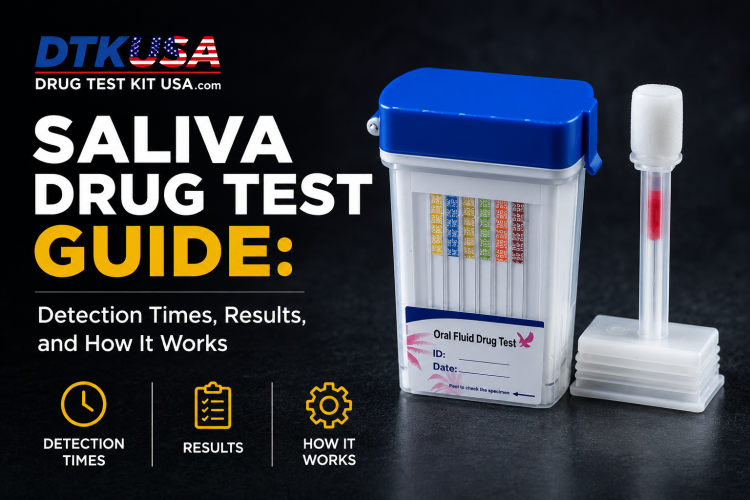
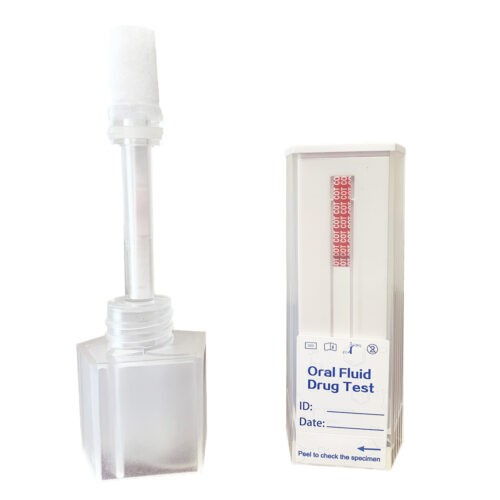
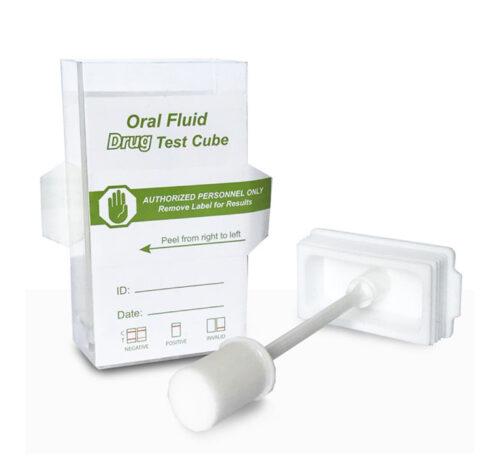
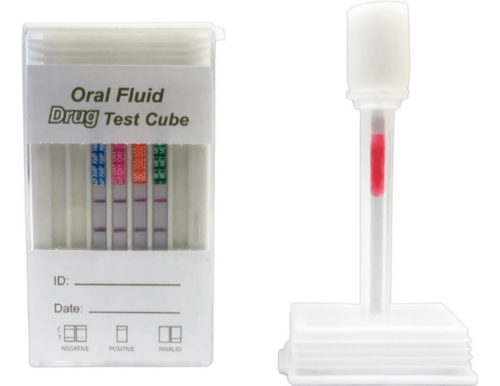
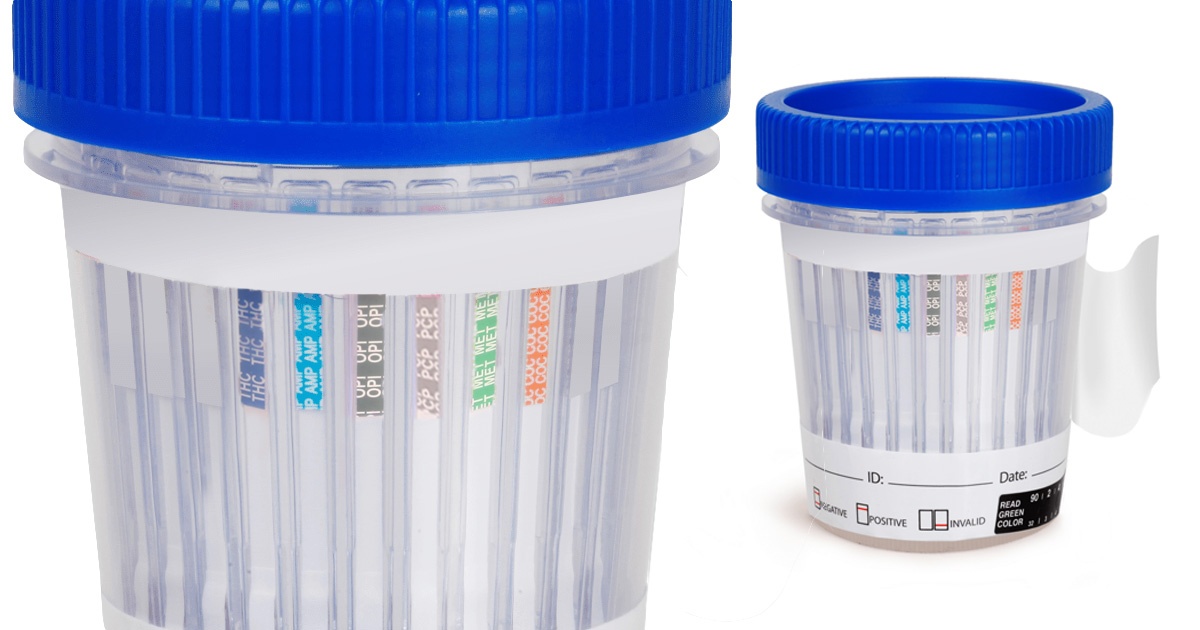
A mouth swab drug test collects oral fluid — a mix of saliva and mucous membrane secretions — using a sponge-tipped swab that the donor places between their lower cheek and gum for a few minutes. Once enough fluid is absorbed, the swab is inserted into a test cassette or collection device that runs an immunoassay (the same basic chemistry behind most rapid drug tests).
The result reads like a standard lateral flow test: one line typically means negative, two lines can indicate a positive, and a missing control line means the test is invalid. Results are usually readable in 5 to 10 minutes.
Because the sample is collected in plain view, oral fluid testing is considered one of the most observed — and therefore hardest to adulterate — collection methods available. There’s no bathroom required, no temperature strips, and nowhere to hide a synthetic sample.
What Drugs Does a Saliva Drug Test Detect?
The answer depends on which panel you choose. Most saliva drug tests on the market come in 6-panel or 12-panel configurations, though single-substance tests are also available.
A standard 6-panel oral fluid test typically screens for:
- THC (marijuana/cannabis)
- Cocaine (COC)
- Methamphetamine (MET)
- Amphetamines (AMP)
- Opiates (OPI)
- Phencyclidine (PCP)
Expanded panels — 10-panel and 12-panel formats — add substances like benzodiazepines, oxycodone, methadone, buprenorphine, and barbiturates. If your program requires DOT compliance or federally mandated screening, confirm the specific panel requirements before ordering.
Saliva Drug Test Detection Time Table
This is the question most people come here to answer. Detection windows in oral fluid are significantly shorter than urine — which matters a lot depending on what you’re trying to catch.
| Substance | Detection Window (Oral Fluid) |
|---|---|
| THC (Marijuana) | 4–24 hours (occasional use); up to 72 hours (heavy daily use) |
| Cocaine | 1–4 days |
| Methamphetamine | 1–4 days |
| Amphetamines | 1–3 days |
| Opiates (Heroin, Morphine, Codeine) | 1–3 days |
| Oxycodone | 1–3 days |
| Benzodiazepines | 1–3 days |
| PCP | 1–3 days |
| Methadone | Up to 3 days |
| Barbiturates | Up to 2–3 days |
A few things worth knowing about these windows:
Marijuana is the outlier. THC clears from saliva far faster than from urine. A heavy cannabis user might test clean on a swab within 24–48 hours of last use, while the same person could test positive on a urine test for 30 days or more. If your primary concern is recent cannabis use — particularly in post-accident or reasonable-suspicion contexts — a saliva test is one of your better options.
Recent use is the sweet spot. Because oral fluid reflects what’s been absorbed through the mucous membranes rather than accumulated metabolites in the body, it tends to detect use that happened in the last 6–48 hours more reliably than use from several days prior. That’s by design. A saliva test is built for catching someone who used recently, not for flagging someone who smoked a joint two weeks ago.
Individual factors still apply. Saliva pH, hydration level, and the frequency of someone’s use all affect how quickly a drug clears from oral fluid. The table above reflects general ranges, not guarantees.
How Does a Saliva Test Compare to a Urine Test?
Both formats use immunoassay technology and can produce a result in minutes, but they serve different purposes.
Urine drug tests have longer detection windows — making them better for pre-employment screening where you’re trying to assess a general pattern of use. They’re the most widely accepted format for regulated workplace programs (including DOT) and typically the least expensive per test. The downside is observed collection is harder to guarantee, which opens the door to adulteration or substitution.
Saliva drug tests are better suited for post-accident testing, reasonable-suspicion testing, or any situation where you need to assess very recent use and want a witnessed, tamper-resistant collection. The shorter detection window isn’t a weakness in those contexts — it’s exactly what you need.
For most employers running a standard pre-employment program, urine is still the workhorse. But having oral fluid tests on hand for incident response situations is something a lot of safety programs overlook until they need them.What Does a Positive Saliva Drug Test Look Like?
Reading the result correctly matters. A negative result on most oral fluid rapid tests shows two lines — one at the control region and one at the test region. A positive result shows only the control line; the test line is absent because drugs in the sample have bound to the test antibodies, blocking the line from appearing. A missing control line means the test is invalid and should be repeated.
Some people expect a positive to look more “flagged” than a negative, but the chemistry works the opposite way. When in doubt, the package insert that comes with every test kit walks through result interpretation with diagrams.
Can a Saliva Drug Test Be Beat?
People ask. The honest answer is: it’s much harder than beating a urine test, and most attempts don’t work.
Because oral fluid collection is directly observed, there’s no opportunity to substitute a sample. Drinking large amounts of water doesn’t dilute oral fluid the way it can dilute urine. Some people believe that mouthwash, mints, or gum can interfere with results — and while there’s some limited evidence that adulterants might briefly affect THC detection in the first few minutes after use, modern collection devices typically include safeguards against this, and any test performed more than a few hours after the last use isn’t significantly affected.
The bigger factor working against evasion is time: if someone knows a test is coming, their most effective strategy is simply to not use drugs. For post-accident testing where there’s no advance warning, evasion is essentially not a factor.
Choosing the Right Saliva Drug Test
Not all oral fluid tests are the same. A few things to look for:
CLIA-waived status. If you’re using the results in a professional or clinical context, look for tests that carry CLIA waiver status, which means they meet federal standards for over-the-counter lab test quality.
Panel configuration. Match the panel to your actual program requirements. A 6-panel test is appropriate for many workplace programs; more regulated or safety-sensitive industries may need expanded panels.
Collection method. Sponge-on-a-stick designs vary in how easy they are to use. Some have built-in indicators that show when enough fluid has been collected — a useful feature, especially for less experienced collectors.
Volume of collection device. Some devices include the collection and testing in one sealed unit; others require the swab to be transferred. All-in-one designs reduce handling steps and potential contamination.
The Bottom Line
A saliva drug test isn’t a universal replacement for urine testing — it’s a different tool for different situations. When you need to assess very recent use, want an observed collection with no privacy concerns, or need results within minutes without any special handling, an oral fluid test is hard to beat.
The short detection windows that some people view as a limitation are actually what make the format ideal for post-accident and reasonable-suspicion testing, where what happened in the last few hours is what matters.
If you’re evaluating which format to add to your drug testing program — or looking for a reliable supply of oral fluid tests — Drug Test Kit USA carries a full range of CLIA-waived oral fluid panels, from 6-panel to expanded configurations, with fast shipping and no minimum order requirements.
-

Accutest Saliva Cotinine Test (25/Box)
$98.75 Add to cart -

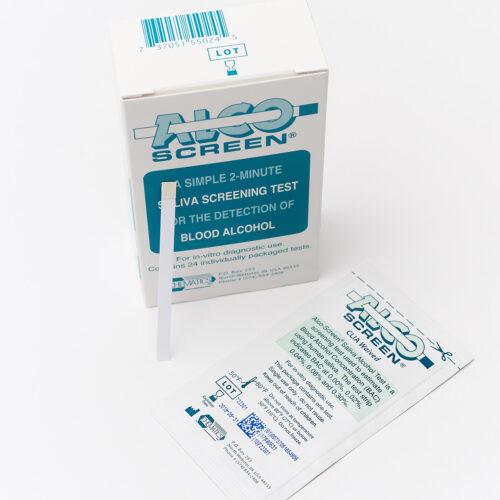
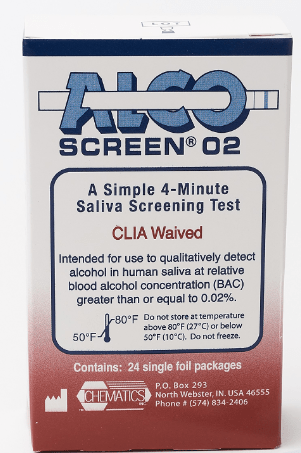
Alco Screen Saliva Alcohol Test (24/Box)
$39.95 Add to cart -

5 Panel Saliva/Oral Drug Test – 25/Box (AMP 50/ MAMP 50/ PCP 10/ COC 20/ OPI 40) (No THC) Forensic Use Only
$115.00 Add to cart -

ALCO Screen 02 Saliva Alcohol Test- DOT Approved
$39.60 Add to cart -

6 Panel Saliva/Oral Drug Test – 25/Box (AMP 50/ MAMP 50/ THC 40/ PCP 10/ COC 20/ OPI 40)
$87.50 Add to cart -

Accustrip CLIA Waived Saliva Alcohol Test Strip – 25/Box
$56.25 Read more
Last updated May 2026. Detection time windows are general estimates based on published research and may vary based on individual factors including metabolism, frequency of use, and hydration. This article is for informational purposes only and does not constitute legal or medical advice.