Getting notified that you need to submit to a drug test — whether it’s a condition of a new job, a court order, or probation — can be a stressful experience, even if you have nothing to hide. The process isn’t always explained clearly, and the stakes are high enough that uncertainty makes it worse.
This guide cuts through the confusion. It covers how workplace and court-ordered drug tests actually work, what each test type detects, how long different substances stay in your system, and what to do if something comes back unexpected. No gimmicks, no shortcuts — just accurate information so you know what to expect.
Why Drug Tests Are Ordered in the First Place
Understanding the purpose behind a drug test makes the process feel less arbitrary.
For employment, most pre-hire screening exists to comply with federal regulations, insurance requirements, or workplace safety standards. Industries like transportation, healthcare, construction, and defense have particularly strict requirements. If you’re applying for a DOT-regulated position — a commercial truck driver, pilot, or railroad worker, for example — federal law mandates drug testing before you can perform any safety-sensitive function. For non-regulated employers, testing is largely discretionary, though it’s become standard practice across many industries.
For court and probation, drug testing is a condition the court imposes to monitor compliance. It’s used in criminal cases, DUI proceedings, custody disputes, and pretrial release programs. Courts often administer these tests randomly and without prior notice specifically to prevent evasion. Failing — or refusing — a court-ordered test carries serious consequences, up to and including revocation of probation or incarceration.
In both contexts, the test itself isn’t personal. It’s procedural. Knowing that doesn’t make the anxiety go away, but it’s worth keeping in mind.
What Type of Test Will You Be Given?
This is often the first question people have, and the answer depends on who’s ordering the test and why.
Urine Testing
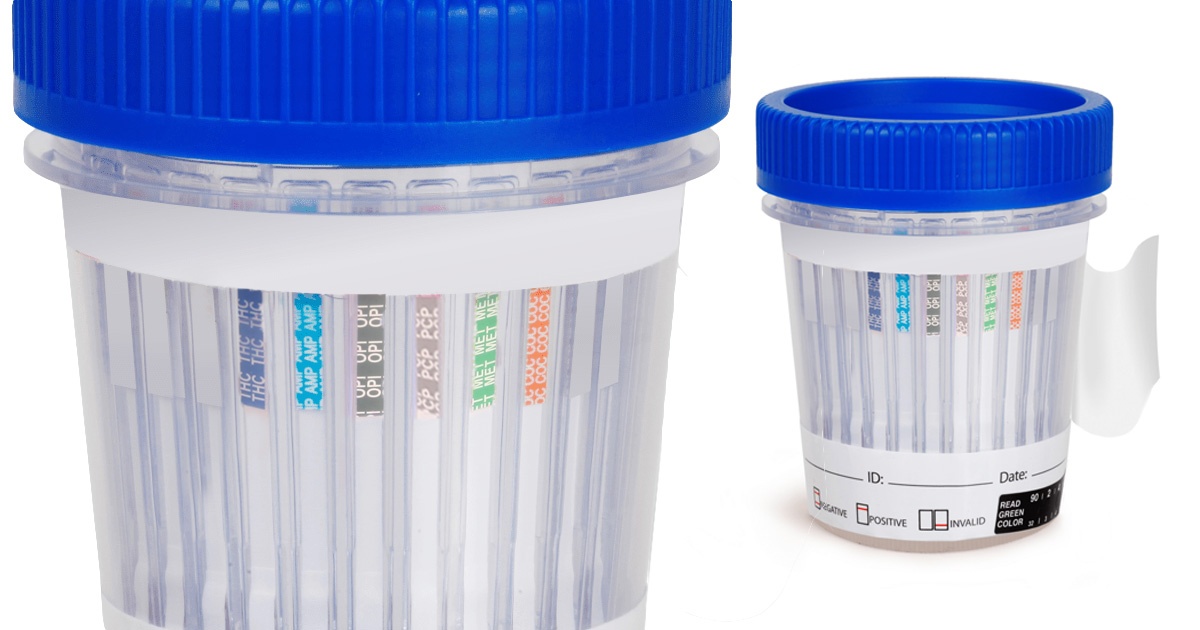
Urine tests are the most common method used in both workplace and court settings. They’re cost-effective, non-invasive relative to blood draws, and have detection windows long enough to catch use that occurred days to weeks prior. The most common court-ordered tests are the 5-panel and 10-panel urine screens.
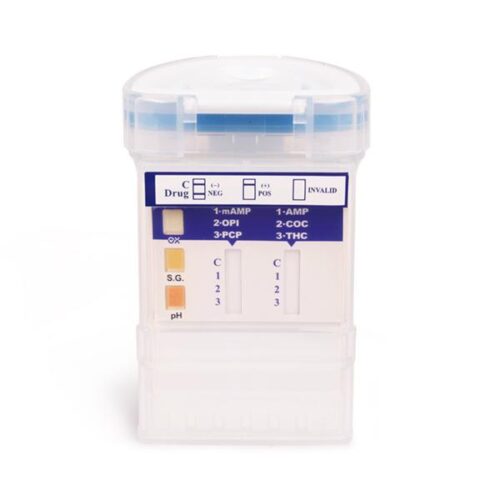
A standard 5-panel test screens for:
- Marijuana (THC)
- Cocaine
- Amphetamines (including methamphetamine)
- Opiates (including heroin, morphine, and codeine)
- PCP (phencyclidine)
A 10-panel or 12-panel extends that list to include benzodiazepines, barbiturates, methadone, oxycodone, and sometimes buprenorphine or MDMA, depending on the configuration.
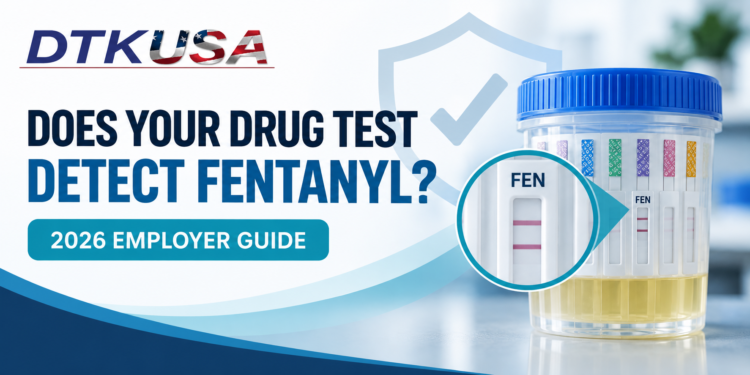
DOT Panel Update — 2026 In September 2025, the DOT issued a proposed rulemaking to add fentanyl and norfentanyl to the standard DOT drug testing panel, with a final rule expected to take effect in 2026. If you work in transportation or are applying for a CDL-required position, confirm which panel applies to your specific test.
Oral Fluid (Saliva) Testing
Saliva tests are increasingly used by employers because they’re harder to tamper with — the collection happens in front of a collector, with a cheek swab. They’re particularly good at detecting very recent use, typically within the last 24 to 72 hours depending on the substance, which makes them useful for reasonable suspicion and post-accident testing.
For court and probation purposes, saliva tests are less common than urine but are used in some jurisdictions. Because they capture recent use, they’re also used in roadside screening programs.
Hair Follicle Testing
Hair follicle tests have the longest detection window of any common testing method — up to 90 days — which makes them valuable in situations where the court or employer wants to assess longer-term use patterns rather than just recent activity. They’re common in custody disputes, return-to-duty situations, and pre-employment screening for certain high-risk roles.
Hair tests are also less susceptible to the timing-based strategies that some people attempt with urine tests. They’re more expensive, which is why they’re not used as a blanket screening tool.
Blood Testing
Blood tests are the least common in routine drug screening. They’re invasive, more expensive to administer, and have a narrower detection window than urine — some substances are undetectable in blood within hours of last use. They’re typically reserved for post-accident situations, clinical settings, or cases where very recent impairment needs to be established.
How Long Do Drugs Stay in Your System?
Detection windows vary considerably based on the substance, the test type, frequency of use, metabolism, body composition, and hydration levels. The ranges below reflect typical detection windows for urine testing in average users — individual results can differ.
| Substance |
Occasional Use |
Regular / Heavy Use |
| Marijuana (THC) |
3–4 days |
Up to 30 days or more |
| Cocaine |
2–4 days |
Up to 1 week |
| Amphetamines / Meth |
1–3 days |
3–5 days |
| Heroin / Morphine |
1–3 days |
3–5 days |
| Oxycodone |
1–3 days |
3–5 days |
| Benzodiazepines |
3–7 days |
Up to several weeks |
| PCP |
3–7 days |
Up to 30 days |
| Methadone |
3–5 days |
Up to 2 weeks |
| Alcohol (standard urine) |
7–12 hours |
12–24 hours |
| Alcohol (EtG test) |
Up to 80 hours |
Up to 80 hours |
Marijuana deserves a specific note: it’s the most unpredictable substance on this list because THC is fat-soluble, meaning it accumulates in tissue over time with regular use. A daily user can test positive for weeks after stopping. Someone who used once will likely clear within a few days. Body fat percentage and metabolism both play a significant role.
What Happens During the Collection Process?
For urine testing, the collection process is straightforward but follows specific protocols designed to maintain integrity.
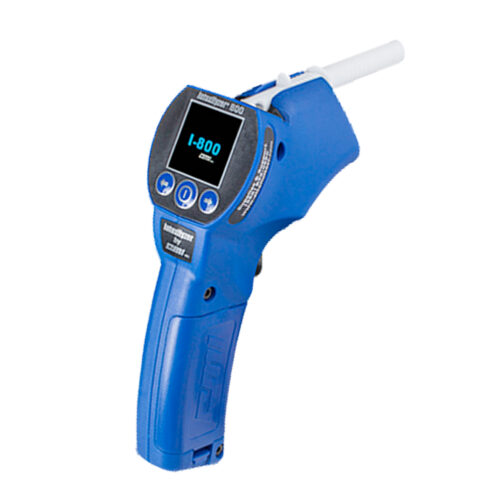
You’ll typically be asked to empty your pockets, wash your hands, and provide a sample in a designated restroom. The water in the toilet is often dyed blue to prevent substitution. The collector will check the temperature of the sample immediately — a valid sample registers between 90°F and 100°F — and will seal the specimen in tamper-evident packaging in front of you.
For probation programs, supervised collections are common, meaning a collector may directly observe the sample being given. Staying calm and respectful throughout the process matters — collector behavior observations are documented in chain-of-custody forms.
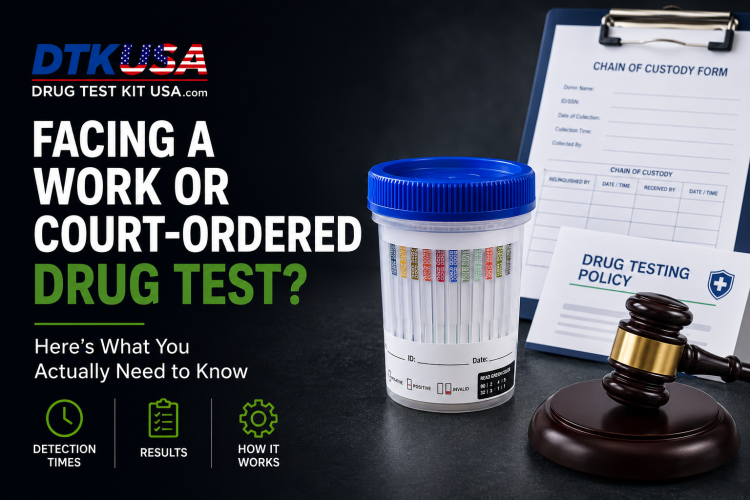
At every step, the chain of custody is recorded: who collected the sample, at what time, under what conditions, and how it was stored and transported. This documentation is what makes a test result legally defensible.
What Happens After You Submit Your Sample?
The sample first undergoes an initial immunoassay screen — a rapid test that detects the presence of drug metabolites above a specific cutoff level. If the initial screen is negative, the process ends there and results are typically reported within 24 to 48 hours.
If the initial screen comes back positive, the sample is sent for confirmation using gas chromatography/mass spectrometry (GC/MS) — a significantly more precise method that rules out false positives and confirms the specific substance. After a positive confirmation, a Medical Review Officer (MRO) reviews the test, and you’ll be given the opportunity to provide documentation for any prescriptions you’re taking.
Important: A positive initial screen is not a final result. Certain prescription medications can trigger false positives — some antihistamines flag for amphetamines, certain antidepressants for opioids, and proton pump inhibitors have been associated with false opiate readings. If you take any prescription medications, be prepared to provide documentation. The MRO review step exists specifically to catch these cases before results go to an employer or court.
Testing at Home Before Your Official Test
Many people facing an upcoming drug test — particularly those with a work deadline or a probation check-in — want to know where they stand before they walk into the collection site.
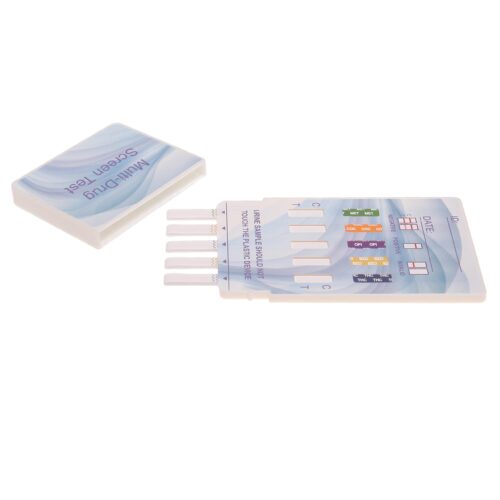
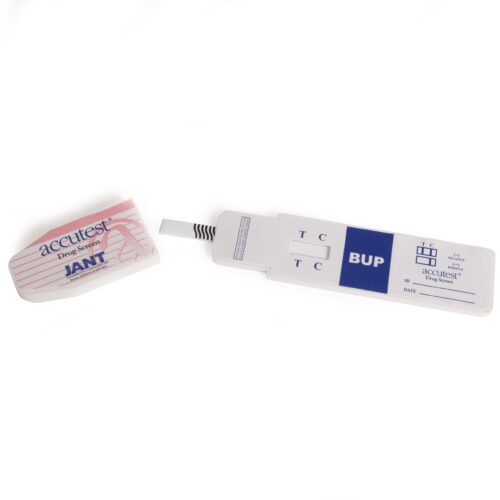
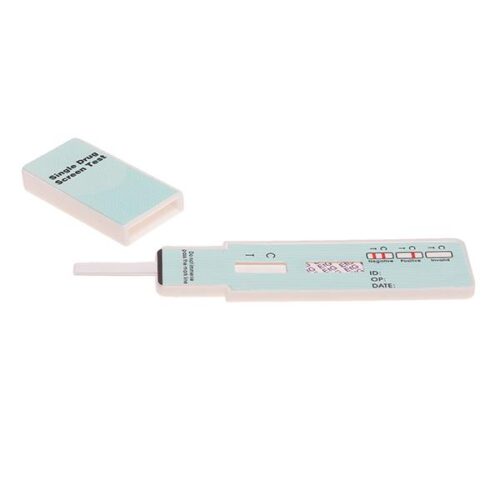
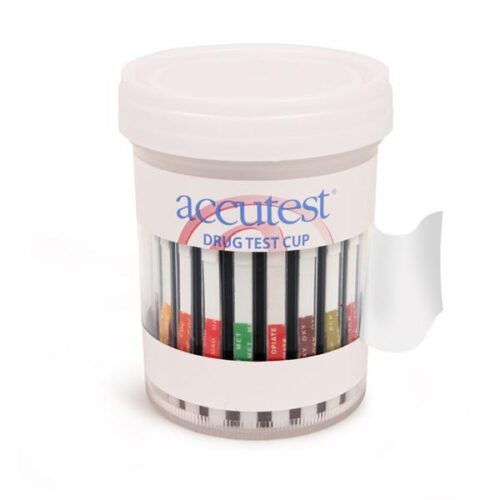
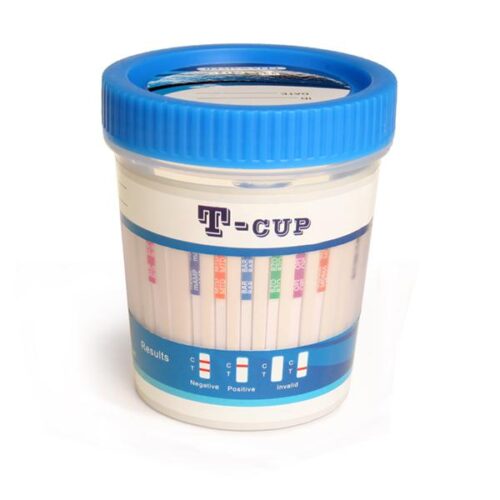
At-home drug tests use the same immunoassay technology as the initial professional screening step. A urine test cup from a reliable source tells you whether you’re currently testing above or below standard cutoff levels. It won’t tell you the exact metabolite concentration in your system, and it won’t replicate the GC/MS confirmation step, but it will tell you whether you’d likely trigger a positive on the first screening — which is the most useful thing to know.
Using an at-home test a few days before your scheduled test — and again the day before — gives you a reasonable picture of your trajectory. If you’re negative at home under similar conditions (same time of day, similar hydration level), that’s meaningful information. A faint or borderline line is equally useful to catch before the official test.
The panel you use at home should match what you expect at your official test. If you’re on probation and your officer uses a 10-panel, test with a 10-panel. If you’re pre-employment for a DOT position, a standard 5-panel is the current baseline.
A Few Things Worth Knowing
Disclose your prescriptions upfront. The MRO review process is designed to account for legitimate prescriptions — but it works better when you initiate the conversation before a positive result creates questions. Ask the collection site whether you should disclose medications before providing your sample, and follow their guidance.
Refusing a test is treated the same as a positive result in virtually every context — workplace, court, and probation. There is no strategic benefit to refusing. For probation, a refusal can trigger the same consequences as a confirmed positive.
Diluted samples raise flags. Drinking excessive water to dilute a sample is something labs specifically watch for. A sample with creatinine levels below a certain threshold is reported as “dilute” or “substituted” — not negative — and may be treated the same as a positive by an employer or court.
Detox products and cleansing drinks are not reliable. The marketing around these products is not supported by independent clinical evidence, and some are actively dangerous. The only reliable path to a negative result is not having the substance in your system above the detection threshold.
If You’re Facing a Court-Ordered Test
The stakes in court-mandated testing are higher than in pre-employment screening, and the process has some specific features worth understanding.
Random testing in probation programs means being prepared for a test on any given day, including a court appearance. Many programs use a color code system — you call a designated number daily to find out if your assigned color has been selected for testing. When your color is called, you’re expected to report promptly. Delays are noted and can raise concerns with your officer.
Failing a first drug test on probation doesn’t automatically mean incarceration. Courts weigh the nature of the original offense, prior violations, and whether the individual has otherwise complied with probation terms. Proactively enrolling in a counseling or substance abuse program before a hearing can demonstrate accountability and influence the outcome. Multiple violations, however, significantly increase the likelihood of a revocation hearing.
If you believe a result is incorrect — due to a prescription medication, a false positive, or a procedural error — you have the right to request a confirmatory test and to discuss the result with the MRO before it’s finalized. Document everything and communicate through proper channels.
The Bottom Line
A drug test, whether ordered by an employer or a court, follows a structured process with defined rules at every step. Understanding that process — the test types, the detection windows, what happens to your sample, and how results are reviewed — takes a lot of the uncertainty out of a situation that already carries enough pressure.
The most practical thing you can do before any scheduled drug test is know your status ahead of time. An at-home test kit uses the same technology as the initial professional screen and gives you real information to work with — not guesswork.