If you’ve shopped for drug test kits, you’ve seen the label “CLIA-waived” on nearly every product. It’s one of the most important terms in this industry — and also one of the most misunderstood. Here’s what it actually means, why it matters for your organization, and what you’re responsible for once you start testing.
What CLIA is, in plain terms
CLIA stands for the Clinical Laboratory Improvement Amendments, a federal law that covers any U.S. facility testing human specimens to assess health or diagnose, prevent, or treat disease. That includes drug testing. If your organization tests even one urine sample on-site, CLIA legally considers you a laboratory — regardless of whether you think of yourself as one.
Oversight of CLIA is split between three federal agencies: the FDA determines how complex a given test is, CMS issues the certificates and runs the compliance side, and the CDC provides scientific and technical support to the program.
What “waived” means
Not all lab tests are treated equally under CLIA. Tests are sorted into complexity categories — waived, moderate, and high — based on how much skill and risk of error is involved. A test earns “waived” status when the FDA determines it’s simple enough and reliable enough to be performed safely without lab-level oversight, following the manufacturer’s instructions exactly.
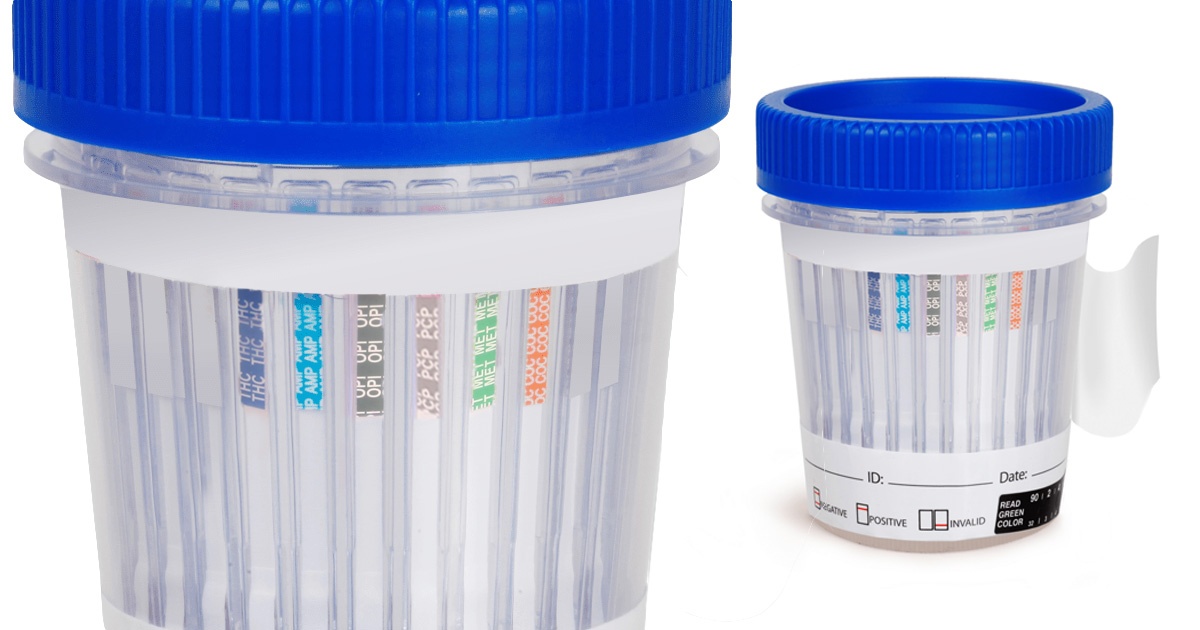
Rapid urine drug test cups, cassettes, and dip cards are almost all in this waived category, which is exactly what makes them practical for workplaces, clinics, and treatment programs — no lab technician or on-site laboratory required.
What you need to legally run waived tests
This is the part buyers often miss: CLIA-waived doesn’t mean unregulated. To legally perform waived testing, a facility needs a Certificate of Waiver from CMS. This is the simplest of the certificate types under CLIA, but it’s still a real requirement — not a formality you can skip because the test itself is “waived.”
Holding a Certificate of Waiver means:
- You must enroll in the CLIA program and hold a valid certificate.
- You must follow the manufacturer’s instructions for the test exactly as written — no modifications, no off-label sample types.
- You’re exempt from the routine biennial inspections and detailed quality-system requirements that apply to moderate- and high-complexity labs.
- You can still be subject to occasional complaint-driven or validation surveys, even though routine inspections don’t apply.
If you deviate from the manufacturer’s instructions in any way — testing a sample type the instructions don’t cover, for instance — the test can be reclassified as high-complexity, which brings a much heavier compliance burden. In short: waived status protects you only when you follow the instructions precisely.
Why this matters when you’re buying test kits
A few practical takeaways for anyone purchasing on behalf of an employer, clinic, or program:
- Confirm your organization holds (or has applied for) a Certificate of Waiver before you start testing on-site. This is separate from purchasing the test kits themselves.
- Keep the manufacturer’s instructions on file and train staff to follow them exactly — this is the core condition of staying “waived.”
- Check the product page classification. Not every test sold for drug screening is CLIA-waived — some specialty and forensic-use tests carry different regulatory classifications and shipping requirements.
- Understand what CLIA-waived does not guarantee — it means the test is simple and low-risk when used correctly, not that a positive result is a legal or medical conclusion on its own. Non-negative results are typically confirmed with a laboratory-based method before any action is taken.
Bottom line
CLIA-waived status is what makes rapid on-site drug testing possible without a full clinical laboratory — but it comes with real conditions, not just a green light to test however you like. If you’re building or scaling a testing program, confirm your certificate status first, then choose products that clearly state their regulatory classification.
Browse our CLIA-waived drug test cups and screening supplies, or contact our team if you’re not sure which classification or configuration fits your program.