

Blog
Does Your Drug Test Actually Catch Fentanyl? What Employers Need to Know in 2026
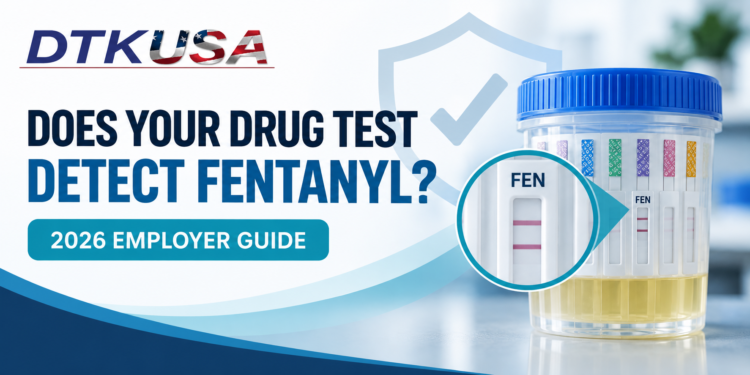
Many employers use what they consider a comprehensive drug-testing panel but may still have an important blind spot: fentanyl. A test may include an opiate
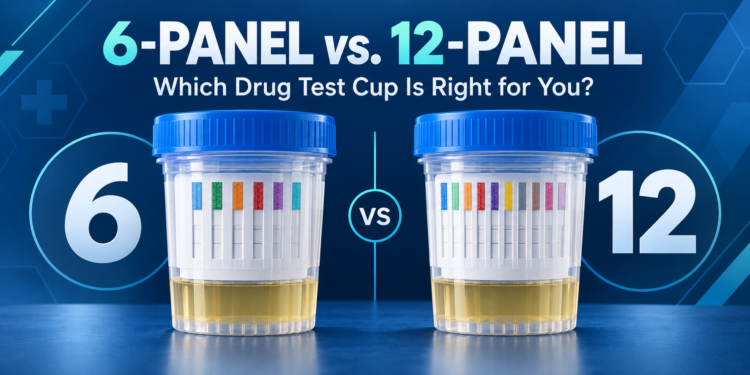
6-Panel vs. 12-Panel Drug Test Cups
Someone on your team just asked, “Why are we still using the 6-panel?” Or maybe it’s the opposite: someone is questioning why you’re paying more for a 12-panel when the 6-panel has always met your needs.
Either way, you need a straightforward answer before placing your next order. Here it is.
A panel represents one drug or drug class included in the screen. With a self-contained urine drug test cup, the specimen is collected directly in the cup and the built-in test strips produce results after the time specified in the package insert.
A 6-panel cup provides six screening results, while a 12-panel provides twelve. The broader panel expands the number of substances screened without requiring separate collection steps.
However, panel count alone does not tell the whole story. Two cups with the same panel count can test for different drug combinations, so always review the exact drug abbreviations and cutoff concentrations before purchasing.
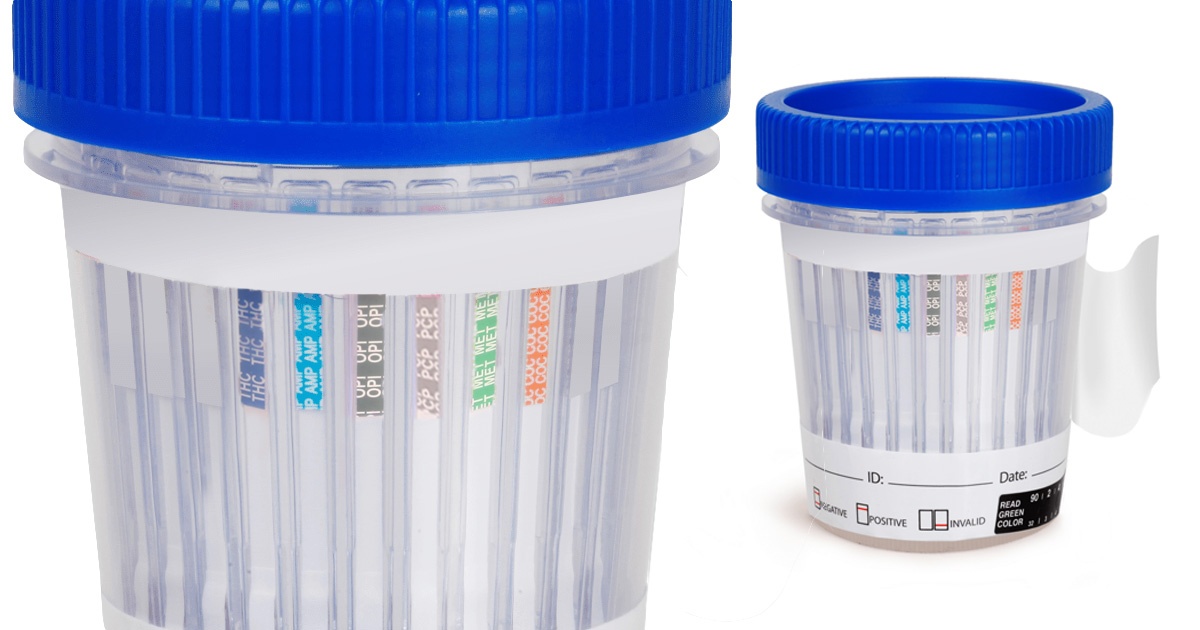
The current DrugTestKitUSA 6-panel configuration screens for:
This configuration covers several drug classes commonly included in workplace screening programs. It overlaps with the traditional five-class federal testing framework while screening amphetamine and methamphetamine separately.
However, a rapid 6-panel cup should not be confused with a federally regulated or DOT-compliant drug test. Federal testing programs have specific collection, laboratory, confirmation, and review requirements.
For a general non-DOT workplace program, a 6-panel may be appropriate when these drug classes align with the organization’s written policy, testing purpose, workforce, and applicable state laws.
Drug test panel configurations are not universal. This applies to both 6-panel and 12-panel tests. Manufacturers may use different combinations even when the products have the same panel count.
The current DTKUSA 6-panel and 12-panel configurations share the following five panels:
The DTKUSA 6-panel also includes:
The DTKUSA 12-panel includes these additional or differently designated panels:
This is why it is important to look beyond the number printed on the box. A “12-panel” label does not guarantee that every manufacturer includes the same 12 drugs or drug classes.
Always review the product’s exact configuration and package insert before adding it to your testing program.
Not necessarily.
Many established 12-panel configurations do not include a dedicated fentanyl panel. Standard morphine-based opiate immunoassays generally do not detect fentanyl because fentanyl is structurally different from morphine-class opiates.
If fentanyl exposure is a concern for your specific testing population, look for a product that specifically lists FEN as one of its panels. Do not assume that a test includes fentanyl simply because it is described as comprehensive or has a high panel count.
Products that include fentanyl may also have different regulatory classifications, such as CLIA-waived or Forensic Use Only. Check the individual product page and package insert before purchasing or using the test.
Start with your testing purpose and population—not simply the panel count or price.
A 6-panel may provide suitable coverage when its included drug classes match the employer’s written testing policy and applicable laws.
Urine drug screening detects the presence of specific drugs or metabolites above established cutoff concentrations. It does not determine whether someone is currently impaired or establish exactly when a drug was used.
These programs may need broader or more targeted screening based on the substances being monitored. That could include buprenorphine, methadone, oxycodone, benzodiazepines, fentanyl, or other specific drug classes.
A detected prescription-related drug does not, by itself, establish misuse. Screening results should be evaluated according to the program’s procedures, clinical context, and confirmation requirements.
A broader panel may be appropriate when the testing program needs to monitor a wider range of drug classes. Depending on the program, this may include a dedicated fentanyl panel or specimen-validity testing.
Panel selection should be based on program requirements, testing authority, local drug-use patterns, and applicable regulations.
Neither a 6-panel nor a 12-panel rapid test cup can be used as a substitute for a DOT-mandated drug test.
DOT rules do not authorize point-of-collection or instant tests for federally mandated testing events. Authorized urine or oral-fluid specimens must be screened and confirmed at an HHS-certified laboratory.
If you are developing or managing a DOT testing program, read our complete guide to DOT drug testing requirements.
A 12-panel cup generally costs more than a 6-panel cup because it screens for more drug classes. The exact difference depends on the product, quantity ordered, and available volume pricing.
The more important question is whether the additional panels match the substances your organization actually needs to screen for. Broader testing is useful when it supports a defined testing objective, but additional panels do not automatically make a test the right choice for every program.
Compare the exact configurations, current prices, and volume tiers before making your decision.
Panel count answers the question, “Which drugs are included?” It does not address specimen validity.
When dilution or adulteration is a concern, consider a cup that includes specimen-validity tests such as:
These measures can help assess the integrity of a urine specimen. However, they should be interpreted according to the package insert and applicable testing procedures; they do not independently prove that a specimen is valid or invalid.
Specimen-validity testing is a separate consideration from drug panel count, so make the decision intentionally rather than assuming every multi-panel cup includes it.
Still unsure which configuration fits your organization? Browse our complete drug test cup lineup, including available options with fentanyl and specimen-validity testing.
Review each product page for its exact panel configuration and regulatory classification, or contact the DrugTestKitUSA team. We’ll help you select a test based on your program’s actual requirements—not simply the industry default.
This article is provided for general informational purposes and is not medical or legal advice. Drug-testing requirements vary by state, industry, testing purpose, and employer policy. Confirm the requirements that apply to your program before establishing or changing a testing protocol.
Many employers use what they consider a comprehensive drug-testing panel but may still have an important blind spot: fentanyl. A test may include an opiate
Someone on your team just asked, “Why are we still using the 6-panel?” Or maybe it’s the opposite: someone is questioning why you’re paying more

Security at Stripe: Learn how Stripe handles security.
A PCI-certified auditor has audited Stripe. We’re a certified PCI Service Provider Level 1. This is the most stringent level of certification available in the payments industry. To accomplish this, we use the best-in-class security tools and practices to maintain a high level of security at Stripe.
Stripe forces HTTPS for all services using TLS (SSL), including our public website and the Dashboard to ensure secure connections:
We regularly audit the details of our implementation, including the certificates we serve, the certificate authorities we use, and the ciphers we support. We use HSTS to ensure that browsers interact with Stripe only over HTTPS. Stripe is also on the HSTS preloaded lists for both Google Chrome and Mozilla Firefox.
All card numbers are encrypted at rest with AES-256. Decryption keys are stored on separate machines. None of Stripe’s internal servers and daemons can obtain plain text card numbers but can request that cards are sent to a service provider on a static allowlist. Stripe’s infrastructure for storing, decrypting, and transmitting card numbers runs in a separate hosting environment, and doesn’t share any credentials with Stripe’s primary services including our API and website.
Why use PayPal?
Your information is secured.
When you pay with PayPal, your financial information is never shared with the seller, and you can pay using only your email address and password.
Security around the clock.
PayPal monitors every transaction 24/7 to help prevent against fraud, email phishing and identity theft. Every transaction is heavily guarded behind their next-level encryption.
If something seems suspicious, their dedicated team of security specialists is immediately on it to help protect you from fraudulent transactions. And remember, PayPal will never ask for any sensitive information from you in an email.
You can be sure that your transaction is protected and secure when you use PayPal at the DrugTestKitUSA checkout.