Last reviewed: November 18, 2026
If you’ve seen headlines about marijuana moving to Schedule III, you may be wondering whether employers, federal programs, or courts can still test for THC.
Rescheduling does not automatically stop marijuana testing or prevent consequences from a positive result. What a THC result means depends on the testing program, applicable state law, and your employer’s policy or court order.
Here’s what changed—and what you should know before a drug test.
What has actually changed?
In April 2026, the Department of Justice issued a final order moving two categories of marijuana from Schedule I to Schedule III under the federal Controlled Substances Act:
- FDA-approved drug products containing marijuana.
- Marijuana covered by a qualifying state-issued medical marijuana license.
The order did not broadly legalize recreational marijuana.
A separate DEA proceeding is considering whether marijuana more broadly should move to Schedule III. As of this article’s review date, that process had not produced a final rule completing broader rescheduling.
Schedule III classification is still a controlled-substance classification. It does not mean marijuana can be used without restrictions, that every marijuana product is FDA-approved, or that workplace and court-ordered testing requirements disappear.
Does rescheduling change what a THC urine test detects?
No. A urine drug test detects substances based on their chemistry, not their legal status.
Standard marijuana urine screens typically look for THC-COOH, a metabolite produced as the body processes THC. Its presence does not, by itself, establish current impairment or exactly when marijuana was used.
For DOT-regulated urine testing, the marijuana metabolite cutoff is:
- Initial screening: 50 ng/mL.
- Laboratory confirmation: 15 ng/mL.
Other testing programs and products may use different cutoffs. Always check the specific test’s instructions or the testing program’s requirements.
Detection time varies with the amount and frequency of use, the test’s cutoff, and individual factors. A urine result cannot reliably tell someone the exact day they will test negative.
Can employers still test for marijuana?
Rescheduling alone does not prohibit employers from testing for marijuana. However, state and local laws may limit when testing is allowed or how employers can use the results.
DOT-regulated testing
Marijuana remains part of DOT drug testing for covered transportation employees in safety-sensitive positions.
DOT’s May 2026 guidance specifically states that a medical review officer cannot verify a laboratory-confirmed marijuana-positive result as negative simply because the employee used a state-licensed marijuana product.
A state medical marijuana card, physician recommendation, or dispensary receipt does not satisfy DOT’s requirements for a legitimate medical explanation.
Federal workplace testing
Marijuana remains included in the federal workplace drug testing panel. Employees and applicants should follow the requirements of the particular federal program.
Private employers
Private-employer policies vary, and state law matters.
For example, California generally protects covered applicants and employees from discrimination based on lawful off-duty cannabis use or an employer-required test finding non-psychoactive cannabis metabolites. Specific exceptions apply, including certain construction and federally governed positions.
Those protections do not permit employees to use cannabis at work or work while impaired.
Other states have different rules. Some protect medical cannabis patients, some restrict pre-employment testing, and others provide fewer protections.
An employer’s written policy should be read alongside applicable law. A handbook does not override legal protections.
What about probation or court-ordered testing?
Rescheduling does not automatically change the conditions of probation, supervision, or a court order.
If your conditions prohibit marijuana use or require drug testing, do not assume that a change in federal scheduling removes those requirements. A medical cannabis card also does not automatically override them.
Ask your attorney or supervising authority how the rules apply to your situation, and obtain any required authorization before relying on an exception.
Does a medical cannabis card excuse a positive result?
Not automatically.
A state medical cannabis card is not the same as a prescription for an FDA-approved medication. Whether medical cannabis use receives employment protection depends on the applicable law and circumstances.
Follow the testing program’s instructions for providing relevant medication information confidentially to the medical review officer. If you are requesting a workplace accommodation, use your employer’s designated process.
For DOT-regulated testing, state-authorized medical marijuana use does not provide an acceptable medical explanation for a marijuana-positive result.
Can hemp-derived THC or CBD cause a positive test?
Hemp-derived THC products can produce a positive marijuana test. CBD products containing THC can also lead to a positive result.
Products labeled “hemp-derived,” “legal,” or “CBD” should not be assumed to be free of THC or free of testing risk.
Federal hemp requirements are also changing. Those product rules are separate from workplace and court-ordered drug testing requirements. A product’s legal availability does not guarantee that using it is permitted under your testing program.
What to do before a drug test
1. Confirm the testing requirements
Find out which substances are included, what specimen type will be collected, and which policy or order governs the test. Urine, oral fluid, and hair tests have different characteristics.
2. Understand the limits of home screening
A test labeled for home use can provide a preliminary result for the substances and cutoffs listed in its instructions.
It cannot guarantee the result of a later workplace or court-ordered test. Results may differ because of collection timing, specimen concentration, test methods, or cutoffs.
Preliminary positive screening results require laboratory confirmation.
3. Avoid relying on detox claims
Do not rely on products promising a guaranteed negative result. Drinking excessive water can produce a dilute specimen, and another collection may be required under the testing program’s rules.
4. Follow the medical review process
Provide relevant prescription information to the medical review officer as instructed. Do not assume that a medical cannabis card or a CBD product label will excuse a positive result.
5. Get the applicable requirements in writing
Review your employee handbook, testing policy, offer conditions, or court order. If something is unclear, seek clarification before the test.
Choosing a THC screening test
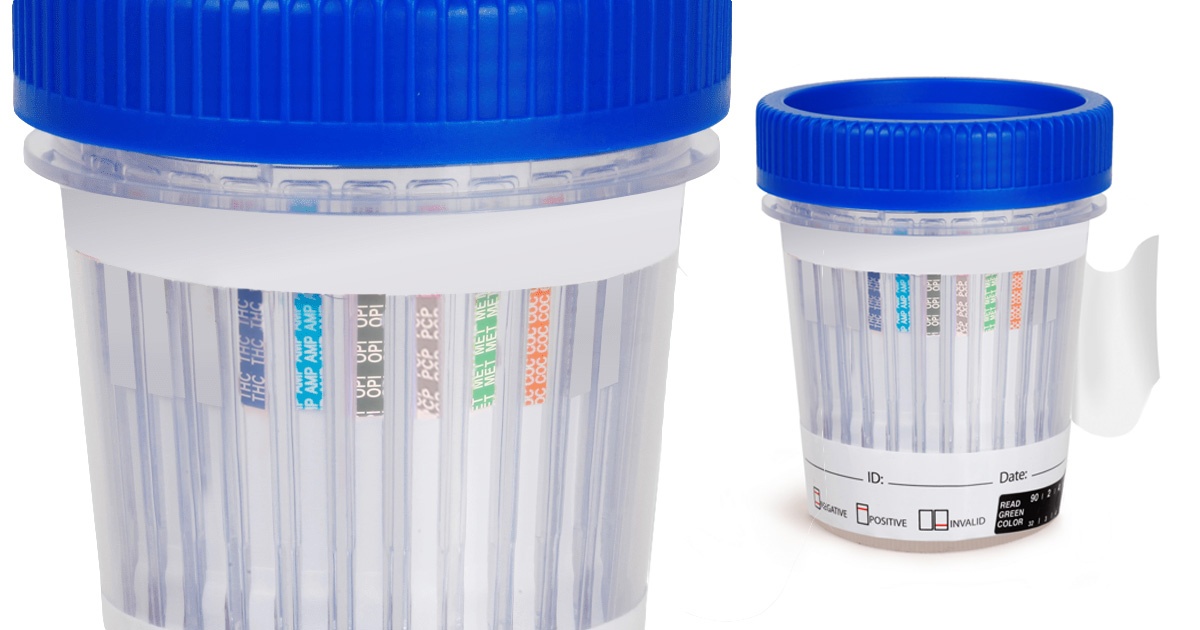
When selecting a urine screening test, check that the configuration includes THC and review the cutoff, intended use, and instructions. Do not assume that every multi-panel test includes marijuana.
DrugTestKitUSA offers multi-panel urine drug test cups with THC configurations for preliminary screening.
Browse drug test cups or call 866-205-9215 for help identifying a product’s panel configuration and specifications.
Sources
This article provides general information, not legal or medical advice. Laws and testing requirements can change. Employment protections and court-ordered conditions vary by jurisdiction and individual circumstances.