

Blog
Will Delta-8 and Hemp THC Products Make You Fail a Drug Test?
Last reviewed: November 18, 2026 Yes – delta-8 THC can trigger a positive initial cannabinoid drug screen. Hemp-derived delta-9 THC and CBD products containing THC
Will Delta-8 and Hemp THC Products Make You Fail a Drug Test?
Last reviewed: November 18, 2026
Yes – delta-8 THC can trigger a positive initial cannabinoid drug screen. Hemp-derived delta-9 THC and CBD products containing THC can also produce positive results.
However, an initial screening result and a laboratory-confirmed result are different steps. What gets reported depends on the substances present, the laboratory’s methods, and the testing program’s requirements.
Changes to federal hemp law do not change that chemistry. A product’s label or legal availability does not determine whether a test detects it.
Most standard marijuana urine screens target THC-COOH, an inactive metabolite the body produces after using delta-9 THC.
Delta-8 produces a closely related metabolite that can react with the same screening tests.
A 2023 study published in the Journal of Analytical Toxicology evaluated three laboratory immunoassay platforms. At the 50 ng/mL screening cutoff, the delta-8 metabolite showed cross-reactivity ranging from 87% to 112%.
In practical terms, the screening tests reacted strongly to the delta-8 metabolite even though they were designed to detect the delta-9 metabolite.
Those findings apply to the platforms studied. Performance can vary among individual screening products.
An initial immunoassay screen provides a preliminary result. It does not necessarily identify which THC isomer caused the reaction.
Laboratory confirmation uses more specific analytical methods. Appropriate methods can distinguish delta-8 and delta-9 metabolites, although interference can complicate some analyses.
The same 2023 study found that delta-8 metabolites caused interference with some confirmatory methods, but none of the participating HHS-certified laboratories falsely reported a confirmed delta-9-positive result because of delta-8 alone.
That does not make delta-8 a reliable way to avoid testing consequences. Products may contain delta-9 THC, and some testing programs specifically identify delta-8 metabolites.
Ask which substances the program tests for and how preliminary results are confirmed.
No. A test responds to substances in the specimen, not to where the product was purchased or how it was marketed.
A hemp label, dispensary receipt, or legal purchase does not guarantee an exception under an employer’s policy or a court order.
Congress amended the federal definition of hemp in November 2025. A later law delayed most of the changes until December 11, 2026, while leaving certain provisions effective November 12.
As of this article’s review date, the changes follow two stages:
These changes affect which products qualify as hemp under federal law. They do not necessarily determine when a particular retailer removes a product or how enforcement proceeds. State requirements may also differ.
Check the current legal status before relying on these dates. Further legislation could change the requirements or implementation schedule.
The changes do not alter how the body processes THC or what a particular test detects.
They also do not automatically change an employer’s testing policy, a federal testing requirement, or the conditions of probation or supervision.
For more background, read our guide to marijuana rescheduling and your drug test.
DOT specifically warns that CBD products may contain THC and that labeling can be inaccurate.
CBD use is not an acceptable medical explanation for a laboratory-confirmed marijuana-positive result under DOT rules.
That guidance concerns a confirmed marijuana result. It should not be interpreted to mean that every delta-8 screening reaction automatically becomes a confirmed DOT positive.
CBD itself is not the target of standard marijuana testing. The concern is THC that may be present in the product.
A “THC-free” label is not a guarantee that a product contains no detectable THC. Product composition, contamination, and labeling accuracy can vary.
If you are subject to drug testing, do not assume that CBD isolate, broad-spectrum CBD, or another product marketed as THC-free eliminates testing risk.
There is no universal waiting period that guarantees a negative result.
Detection depends on factors such as:
A negative urine screen also does not establish that someone is unimpaired or that no cannabinoid use occurred.
Ask which substances are included and whether the specimen will be urine, oral fluid, or hair. If delta-8 is relevant, ask whether the laboratory distinguishes delta-8 and delta-9 metabolites.
A urine test labeled for home use can provide a preliminary result for the substances and cutoffs listed in its instructions.
It cannot guarantee a later workplace or court-ordered result. Collection timing, specimen concentration, testing methods, and cutoffs may differ.
Preliminary positive results require laboratory confirmation.
Products promising a guaranteed negative result are not a dependable way to predict an official test outcome.
Drinking excessive water can produce a dilute specimen. Depending on the testing program and specimen-validity findings, another collection may be required.
Provide relevant medication and product-use information to the medical review officer as instructed. Keep product packaging and ingredient information if questions arise.
Disclosure does not guarantee that a positive result will be excused.
Read your employer’s testing policy or your court-ordered conditions. State and local laws may provide protections or impose limits, and a written policy does not override those laws.
Seek clarification before assuming that a legally purchased product is permitted under your testing program.
For professional screening, check the product’s listed substances, THC cutoff, intended use, and instructions.
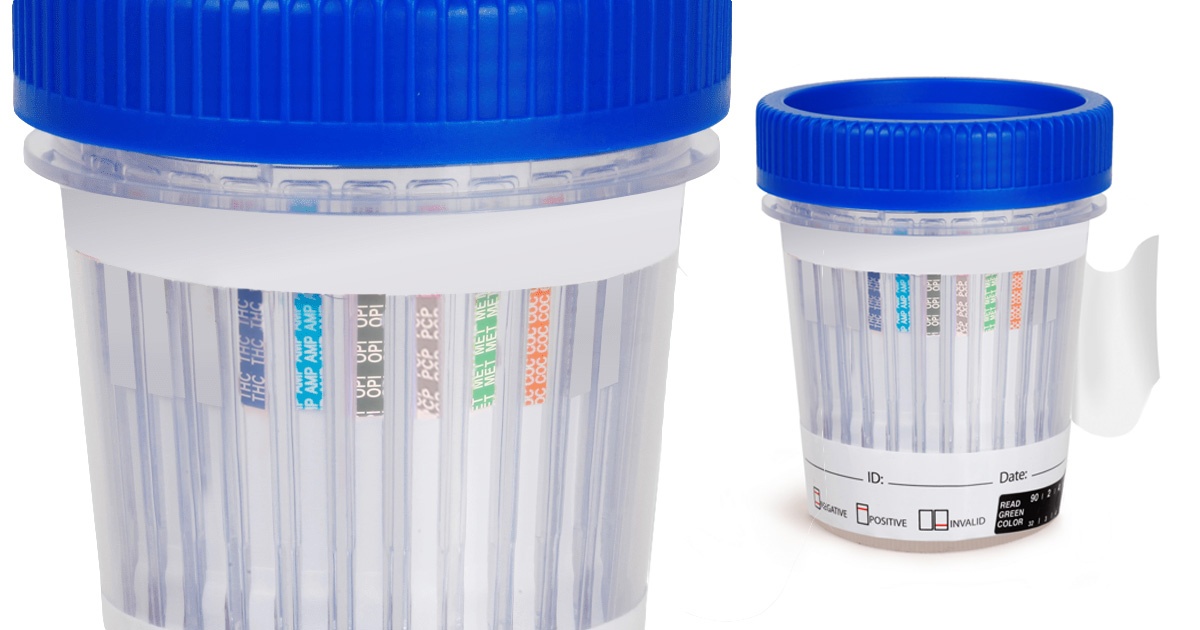
Do not assume that a standard THC screening cup can distinguish delta-8 from delta-9. Cross-reactivity is product-specific, and the manufacturer’s documentation should guide interpretation.
DrugTestKitUSA offers multi-panel urine drug test cups with THC configurations for qualified business and clinical buyers.
Browse drug test cups or call 866-205-9215 for help identifying panel configurations and product specifications.
This article provides general information, not legal or medical advice. Laws and testing requirements can change. Employment protections and court-ordered conditions vary by jurisdiction and individual circumstances.
Last reviewed: November 18, 2026 Yes – delta-8 THC can trigger a positive initial cannabinoid drug screen. Hemp-derived delta-9 THC and CBD products containing THC
Last reviewed: November 18, 2026 If you’ve seen headlines about marijuana moving to Schedule III, you may be wondering whether employers, federal programs, or courts

Security at Stripe: Learn how Stripe handles security.
A PCI-certified auditor has audited Stripe. We’re a certified PCI Service Provider Level 1. This is the most stringent level of certification available in the payments industry. To accomplish this, we use the best-in-class security tools and practices to maintain a high level of security at Stripe.
Stripe forces HTTPS for all services using TLS (SSL), including our public website and the Dashboard to ensure secure connections:
We regularly audit the details of our implementation, including the certificates we serve, the certificate authorities we use, and the ciphers we support. We use HSTS to ensure that browsers interact with Stripe only over HTTPS. Stripe is also on the HSTS preloaded lists for both Google Chrome and Mozilla Firefox.
All card numbers are encrypted at rest with AES-256. Decryption keys are stored on separate machines. None of Stripe’s internal servers and daemons can obtain plain text card numbers but can request that cards are sent to a service provider on a static allowlist. Stripe’s infrastructure for storing, decrypting, and transmitting card numbers runs in a separate hosting environment, and doesn’t share any credentials with Stripe’s primary services including our API and website.
Why use PayPal?
Your information is secured.
When you pay with PayPal, your financial information is never shared with the seller, and you can pay using only your email address and password.
Security around the clock.
PayPal monitors every transaction 24/7 to help prevent against fraud, email phishing and identity theft. Every transaction is heavily guarded behind their next-level encryption.
If something seems suspicious, their dedicated team of security specialists is immediately on it to help protect you from fraudulent transactions. And remember, PayPal will never ask for any sensitive information from you in an email.
You can be sure that your transaction is protected and secure when you use PayPal at the DrugTestKitUSA checkout.